Open Research Positions
The Scientific Artificial Intelligence (ScAI) Lab at Stevens Institute of Technology develops machine learning methods that accelerate scientific discovery in domains governed by physical laws. We are always interested in hearing from motivated students and researchers who want to work on applying ML to scientific systems, cyber-physical systems, or to other systems exhibiting complex spatiotemporal dynamics.
What we work on
Our research embeds scientific domain knowledge directly into learning algorithms so that predictions remain accurate, physically consistent, and able to generalize beyond the training regime. Work in the lab falls into three interconnected themes:
- AI for Scientific Discovery — physics-guided neural surrogates for complex physical systems, including computational fluid dynamics, molecular dynamics, and stochastic PDEs, with an emphasis on generalization under data paucity.
- AI for Cyber-Physical Systems — learning system invariants and detecting anomalies, adversarial attacks, and faults in noisy, real-time sensor and wireless data streams.
- Spatiotemporal and Disease Modeling — attention-based and sequence-to-sequence models for long-horizon forecasting and interpretable analysis of high-dimensional dynamical systems.
Members in the lab have published at venues including ICLR, AAAI, IJCAI, IEEE ICDM, and SIAM SDM, and have interned at prestigious national laboratories like Los Alamos National Laboratory. Our work is supported by organizations such as eBay Inc. and Stevens Institute of Technology.
Ph.D. Students
Admission requirements
- Meet the Stevens Computer Science graduate admission standards, and apply to the Ph.D. program in Computer Science.
- International applicants must satisfy the university's English language proficiency requirements.
- Submit a CV, personal statement, transcripts, and any writing samples or publications through the standard application.
Preferred qualifications
- Strong foundation in programming (Python, PyTorch or JAX) and in mathematics — linear algebra, probability, and statistics.
- Background in machine learning; familiarity with partial differential equations, numerical simulation, or time-series modeling is a plus.
- Genuine enthusiasm for research, and the persistence that scientific machine learning problems demand.
- Ability to write clearly and communicate technical work in professional English.
M.S. and Undergraduate Researchers
- Currently enrolled Stevens students, with independent or fellowship funding where applicable.
- Computer science, engineering, or applied mathematics background, with solid programming skills.
- Demonstrated interest in machine learning for scientific or physical systems — relevant coursework or a project you can point to.
- Willingness to commit meaningful time over more than one semester; research projects rarely conclude within a single term.
M.S. thesis students in the lab have gone on to Ph.D. programs and have won departmental thesis awards.
Get in touch
Email nmurali1@stevens.edu with [Prospective ScAI Lab Researcher] in the subject line, and include:
- Your CV, highlighting AI/ML relevant experience, including publications, if any.
- A short note on which of the lab's research themes interests you and why — mention one or two specific recent research papers you have read that align with your interests.
- Your transcripts, and the position and start date you have in mind.
Ph.D. applicants should also submit a formal application to the Stevens Computer Science Ph.D. program; an email alone cannot be considered for admission.
About Stevens
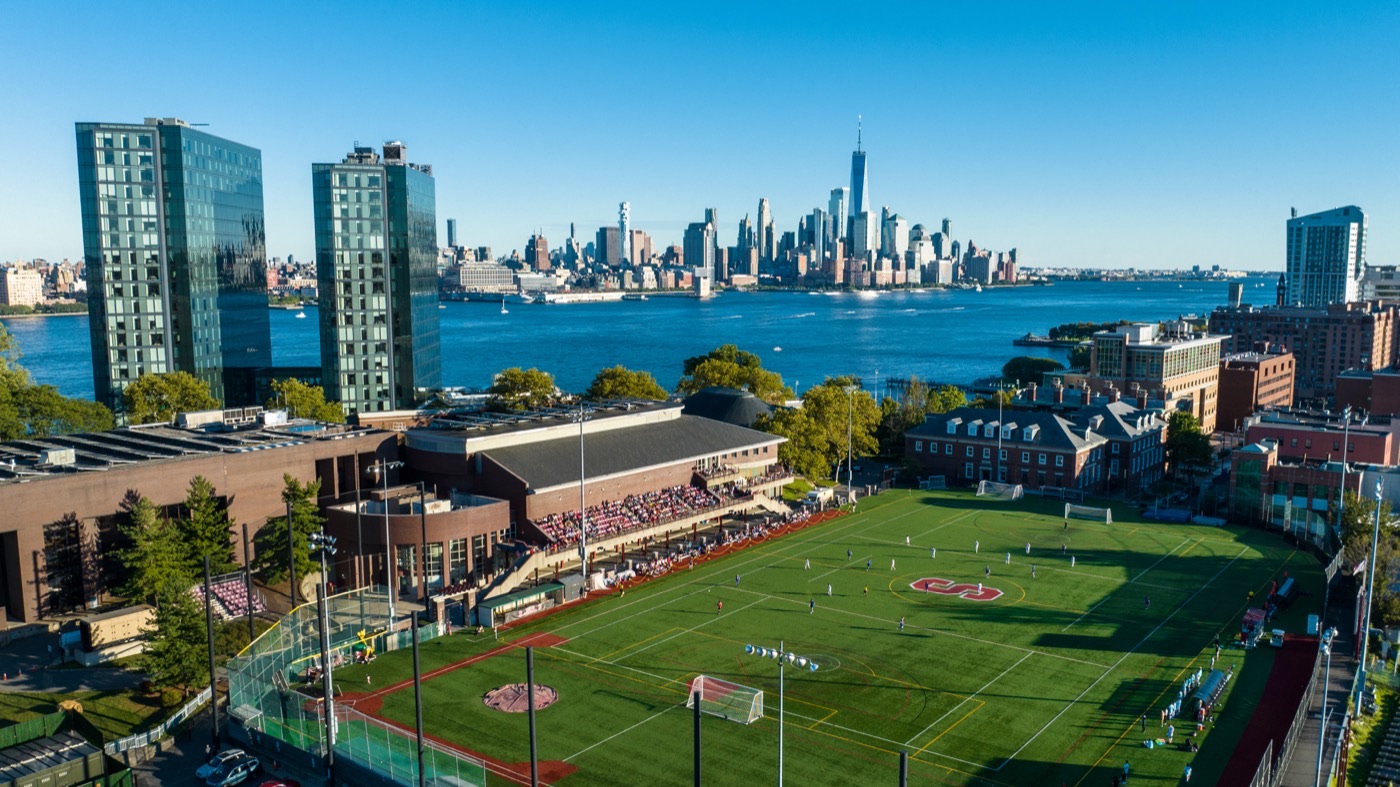
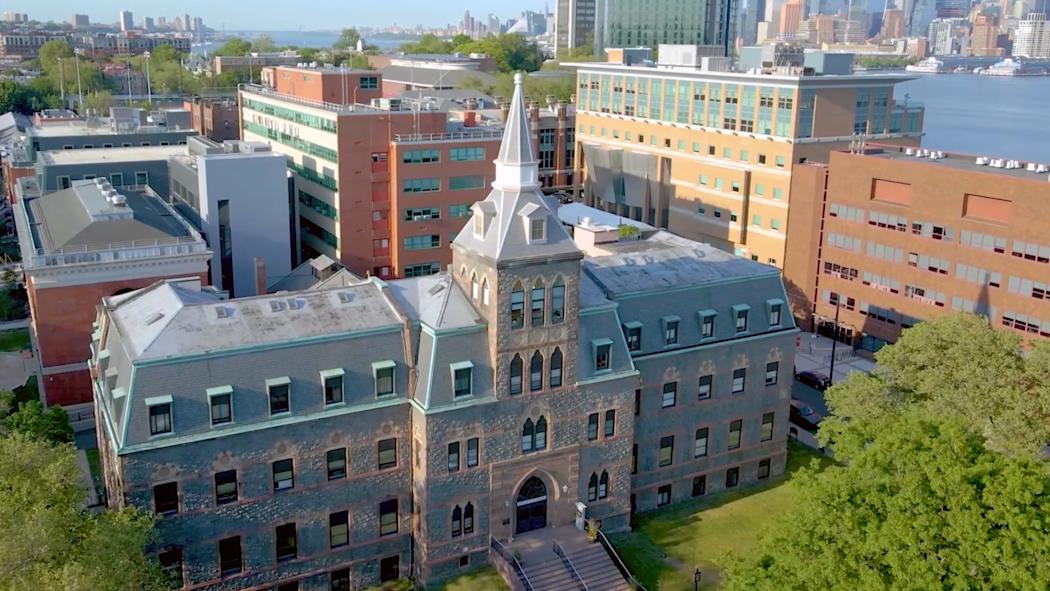
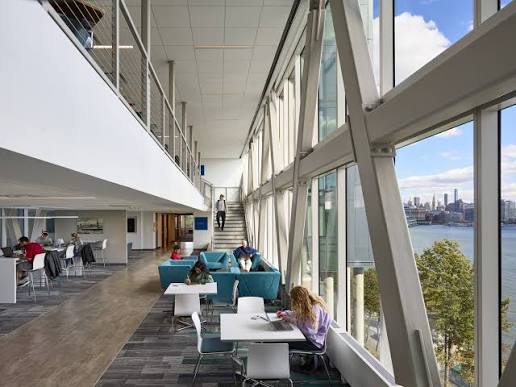
Stevens Institute of Technology sits on a 55-acre campus in Hoboken, New Jersey, overlooking the Hudson River and directly across from Manhattan. The location offers easy access to New York City and to collaboration with nearby universities, national laboratories, and industry research groups.